
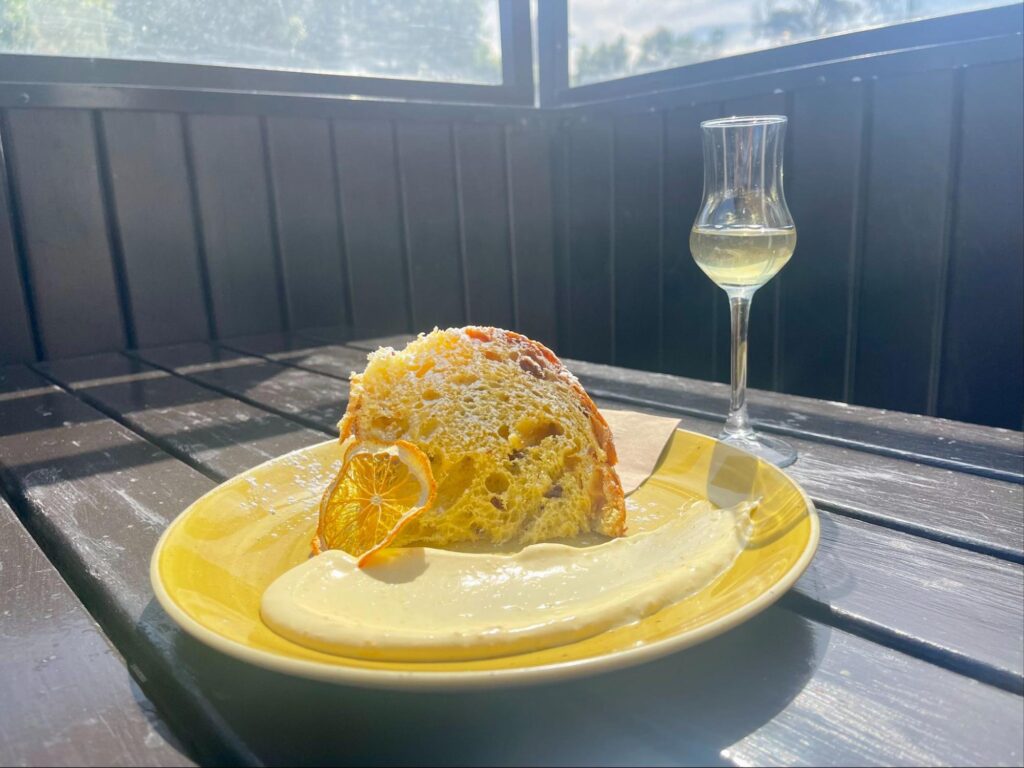
Panettone is a delightful sweet bread that has been a beloved holiday classic. It’s got interesting layers of flavours: a rich dough filled with dried fruit, raisins, and a hint of citrus zest. Simply irresistible and amazing for a holiday treat!
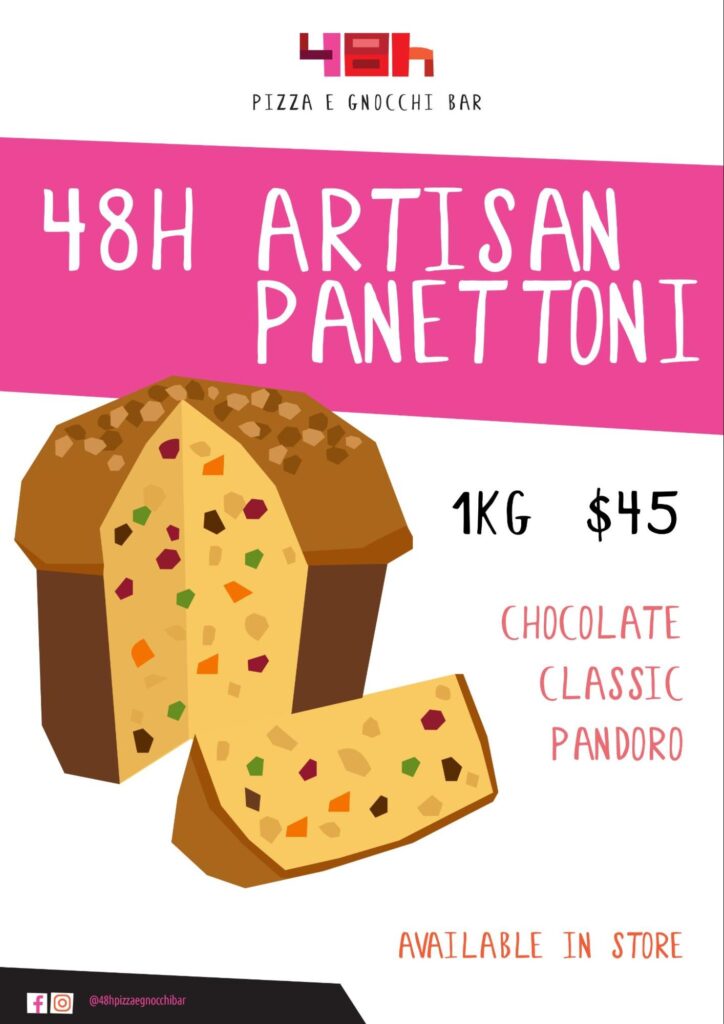
At 48h Pizza e Gnocchi Bar, our 48h Artisan Panettoni are made with love and care. We offer flavour variations like panettone chocolate, pandoro, and the traditional fruit-filled variety for only $45 each 1 kg.
Visit us in-store to treat yourself to our famous panettone and other mouthwatering Italian dishes!
Want to learn more about panettone? Read on for all the details on how to enjoy this festive favourite.
What is Panettone?
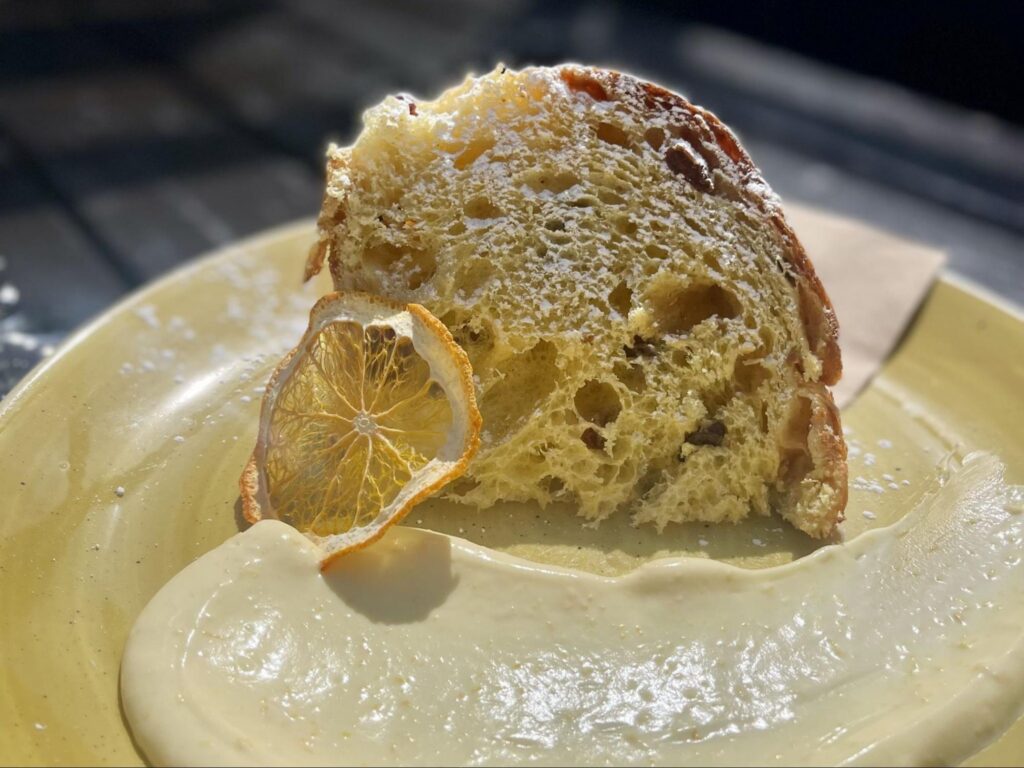
Panettone (pronounced “pan-eh-toe-nee”) is a traditional Italian sweet bread that is especially popular during the holiday season. It’s a staple around Christmas and New Year.
The texture is light and fluffy and is filled with dried fruit, raisins, and sometimes candied citrus peel. A burst of flavour is all you’ll experience in each bite!
This airy dessert is perfect for slicing and enjoying with coffee or a hot beverage on a slow morning.
Where Did Panettone Originate?
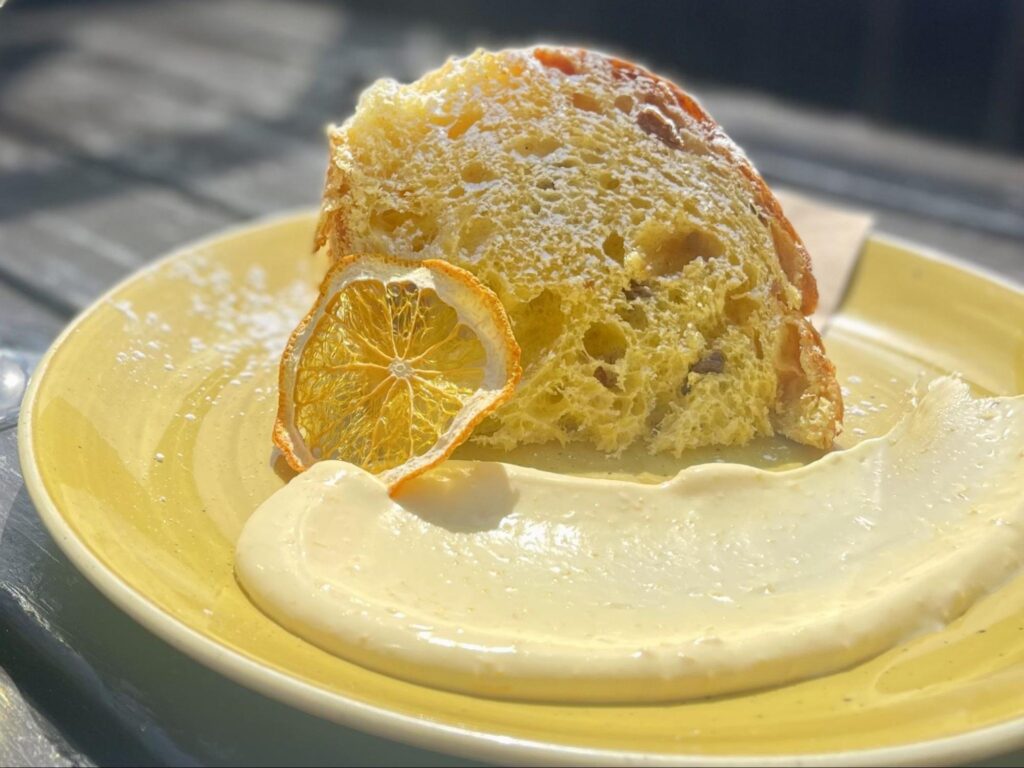
Panettone is widely believed to have originated in Milan, Italy. Some call it panettone cake, sweet bread, or Christmas cake. Which one is right?
Well, Italians call it bread. The word panettone comes from panetto, meaning a small loaf of bread, and the suffix -one, which indicates something large, translates to “large bread.”
The first documented mention of panettone can be traced back to 1599, in a register of expenses from the Borromeo College in Pavia.
Nowadays, it is typically enjoyed for Christmas and New Year in parts of Europe, South America, Eritrea, Australia, the US, and Canada.
CSM Ingredients data shows that in 2022 the panettone market grew significantly, reaching 291.1 million euros, up by 15.7%. The Artisanal segment made up 54% with an 18% growth, while the Industrial segment contributed 46% with a 13% increase. This is how popular this bread is!
What Ingredients are in Panettone?
An authentic panettone recipe includes several ingredients: flour, yeast, butter, sugar, eggs, milk, candied fruit such as orange and citron peel, raisins, and lemon zest.
You need at least two days for the dough to rise, resulting in the perfect panettone texture and flavour.
How To Eat Panettone
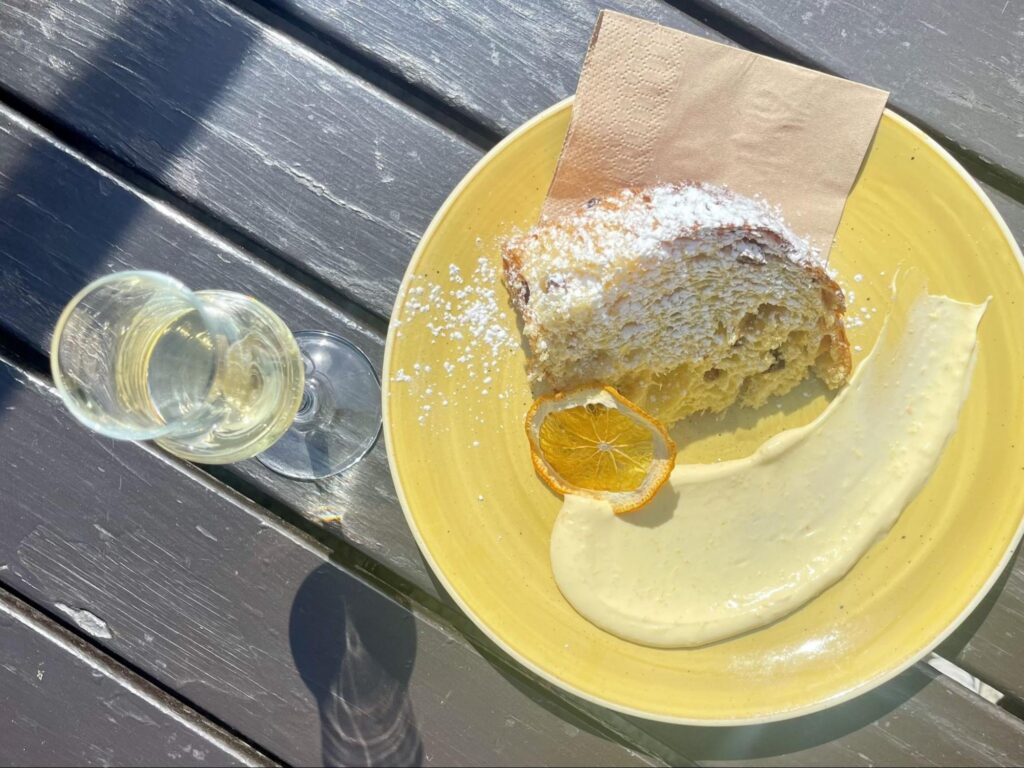
So, how do you eat panettone? The traditional way to enjoy it is by slicing the loaf into wedges, which you can then pair with a cup of coffee or a sweet beverage.
Many Italians love to serve it with a dollop of mascarpone cream, which adds a rich and velvety touch to each bite.
Want to add more twist and texture? You can toast your panettone or make other variations, such as French toast, bread pudding, or crumbled-over gelato.
One thing to note is that it’s uncommon to remove the dome top and eat it alone, as the entire loaf is meant to be enjoyed in its full, airy form.
Historical Patterns in Football Betting Explored by Betzoid
Football betting has evolved dramatically over the past century, transforming from informal wagers between spectators into a sophisticated global industry worth billions of dollars annually. Understanding the historical patterns that have shaped betting behaviors, odds movements, and market dynamics provides crucial insights into how modern football wagering operates. By examining decades of data and trends, analysts have identified recurring patterns that illuminate the relationship between sporting events, public sentiment, and betting markets. These patterns reveal not only how bettors have responded to different circumstances throughout history but also how bookmakers have adapted their strategies to manage risk and maintain profitability in an ever-changing landscape.
The Evolution of Football Betting Markets Through the Decades
The formalization of football betting began in earnest during the early 20th century, with fixed-odds betting becoming the dominant model in Europe. The 1920s and 1930s saw the establishment of betting shops across the United Kingdom, creating the first systematic approach to football wagering. During this period, betting patterns were relatively straightforward, with most wagers placed on match outcomes—home win, away win, or draw. The limited information available to bettors meant that local knowledge and team reputation heavily influenced betting decisions, often creating significant disparities between public perception and actual probabilities.
The post-World War II era brought substantial changes to betting patterns as football gained unprecedented popularity. The introduction of football pools in the 1940s and 1950s democratized betting, allowing ordinary citizens to participate in organized wagering with small stakes. Historical data from this period shows that bettors consistently overvalued home teams, a bias that bookmakers exploited for decades. The 1960s witnessed the emergence of more sophisticated handicapping methods, with some bettors beginning to track team statistics and form guides systematically. This marked the beginning of a gradual shift from purely emotional betting to more analytical approaches.
The 1990s represented a watershed moment for football betting with the advent of internet technology and the liberalization of gambling laws in various jurisdictions. Online betting platforms revolutionized access to markets, and the increased competition among bookmakers led to better odds and more diverse betting options. Research platforms such as https://betzoid.org/ have documented how this period saw the introduction of Asian handicaps, over/under markets, and in-play betting, fundamentally altering betting patterns. The availability of comprehensive statistics and real-time information began to level the playing field between bookmakers and informed bettors, creating more efficient markets where value became increasingly difficult to identify.
Recurring Patterns in Betting Behavior and Market Movements
Analysis of historical betting data reveals several persistent patterns that have remained remarkably consistent across different eras and competitions. One of the most documented phenomena is the favorite-longshot bias, where bettors systematically overbet on longshots while undervaluing favorites. This pattern, identified in academic research dating back to the 1950s, persists in modern markets despite increased sophistication among bettors. The psychological appeal of large potential payouts from unlikely outcomes appears to override rational probability assessment for many participants.
Another significant historical pattern involves the home underdog scenario. Data spanning multiple decades shows that home teams receiving odds as underdogs have historically provided positive returns for bettors who systematically backed them. This pattern reflects the public’s tendency to overreact to recent away performances while underestimating the psychological and tactical advantages of playing at home. Bookmakers have gradually adjusted their pricing models to account for this bias, but the pattern has shown remarkable persistence, particularly in lower-tier competitions where information asymmetries remain more pronounced.
Seasonal patterns have also emerged as reliable indicators of betting value. Historical analysis demonstrates that early-season matches often feature inflated odds on newly promoted teams, as bookmakers and bettors alike struggle to accurately assess the competitive balance. Similarly, end-of-season matches involving teams with nothing to play for have historically produced unpredictable results that deviate from form-based expectations. The “winter break effect” in leagues that pause during December and January has been documented as creating temporary value opportunities when teams return to competition with varying levels of preparation and fitness.
Public betting patterns around major tournaments like the World Cup and European Championships reveal distinct behaviors. Historical data shows that national pride significantly influences betting decisions during international competitions, with domestic bettors heavily backing their national teams regardless of realistic prospects. This creates systematic value on opposing teams, particularly when popular nations face technically superior opponents. The “group stage value” phenomenon, where underdogs in tournament opening matches historically outperform expectations, has been documented across multiple World Cup cycles.
Technological Advancement and Pattern Recognition
The digital revolution has fundamentally transformed how historical patterns are identified and exploited in football betting markets. The 2000s saw the emergence of betting exchanges, which introduced peer-to-peer wagering and unprecedented market transparency. This innovation allowed researchers and professional bettors to analyze actual market movements rather than relying solely on bookmaker odds. The availability of historical odds data enabled sophisticated statistical modeling, revealing patterns that were previously obscured by limited information.
Machine learning and artificial intelligence have recently been applied to decades of historical betting data, uncovering complex patterns that human analysis might miss. These technologies have identified subtle correlations between variables such as referee assignments, travel distances, rest periods, and betting market movements. Historical pattern recognition has become increasingly granular, with models now capable of identifying value opportunities based on combinations of dozens of factors simultaneously. However, this technological arms race has also made markets more efficient, as bookmakers employ similar technologies to price their offerings more accurately.
The proliferation of data analytics has democratized access to historical insights that were once the domain of professional syndicates. Contemporary bettors can access decades of match results, team statistics, and historical odds through various platforms and databases. This accessibility has created a more informed betting public but has also compressed margins for advantage players. The historical pattern of bookmaker dominance through information asymmetry has gradually eroded, forcing the industry to rely more heavily on volume and market-making skills rather than simply exploiting uninformed bettors.
Understanding the historical patterns in football betting provides valuable context for contemporary market participants. The persistent biases, seasonal effects, and behavioral tendencies documented over decades continue to influence modern betting markets, even as technology and information access have evolved. While the magnitude of these patterns may have diminished as markets have become more efficient, they remain relevant for those seeking to understand the fundamental dynamics of football wagering. The interplay between human psychology, statistical probability, and market mechanics that has characterized football betting throughout its history continues to shape opportunities and challenges in today’s sophisticated betting landscape.
How To Keep It Fresh
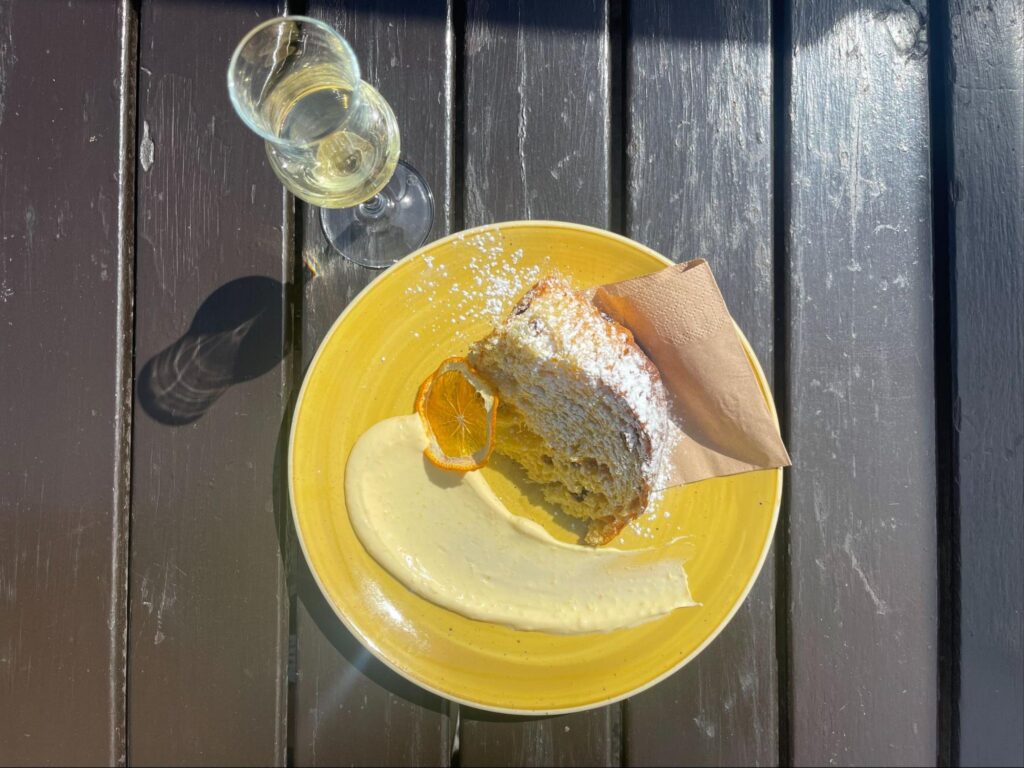
To keep artisanal or homemade panettone fresh, it’s best to wrap it in plastic wrap once it has cooled completely. Store it in a cool and dry place away from direct sunlight to stay fresh for 15-20 days; avoid the fridge for storage!
You can freeze panettone for longer preservation, but ensure it’s tightly wrapped in plastic or foil to protect it from freezer burn.
Meanwhile, store-bought panettone with preservatives usually stays fresh longer, but it’s still important to keep it wrapped in its initial packaging or wrap it in plastic once opened. Or, you can store it inside an airtight container to maintain its fluff and freshness.
Frequently Asked Questions
Is Panettone a bread or a pudding?
Panettone is a type of sweet bread because it uses yeast-based dough. It results in a light, fluffy texture.
Is panettone healthy?
While panettone is delicious, it’s not particularly healthy. It’s rich in sugar and butter and often contains dried fruits, making it high in calories.
Has panettone got alcohol in it?
Traditional panettone recipes do not include alcohol, but some versions may be soaked in liqueurs or other spirits to spice it up.
Get Your Panettone at 48h Pizza e Gnocchi Bar
Now that you know all about the irresistible, authentic panettone and its delicious history, why not treat yourself to some fresh, artisanal panettone from 48h Pizza e Gnocchi Bar?
Our 48h Artisan Panettoni are made with love and care, offering classic flavour variations like panettone chocolate, pandoro, and the traditional fruit-filled variety. Each 1 kg panettone is priced at $45 and is available in-store for you to enjoy.
Visit 48h Pizza e Gnocchi Bar to treat yourself to our famous panettone and a variety of other mouthwatering, authentic Italian dishes!